Tasty Broiled Garlic Sprouts

The last post mentioned that we had some garlic in the garden from last year. It’s greenery is growing taller, even though the weather has been swinging from 10-20 degrees too hot and then too cold for this time of year. I guess the main thing is that the garlic is receiving enough sunlight to continue growing.

We tried broiling the garlic sprouts in the oven. It was delicious!

We harvested a few of the biggest sprouts. Some of them needed to have the ground broken before their roots would let go. Once they were pulled out of the ground the outer layers with most of the dirt were peeled away, leaving a very large scallion. The tops and roots were trimmed and any dirt washed off.

Then, the 8-inch scallions were placed in a shallow dish. A couple tablespoons of olive oil were poured over the garlic sprouts. Each sprout was turned in the oil so it was completely covered and then transferred to a foil-covered broiling pan. Black pepper was the only seasoning.

We put the pan under the broiler for only a few minutes and then you could hear the oil was hot. At this point you have to stay close and watch or the garlic will burn to a crisp. Turn the garlic when it browns on one side. Remove the garlic when it gets a little crispy on the other side and serve at once.

Forgot to get a picture this time, but there will be more broiled garlic sprouts to enjoy very soon. Does anybody else out there eat garlic like this? It had a mild flavor and everyone enjoyed it.

Reblog this post [with Zemanta]
Posted in Growing, Using Herbs | Tagged , | Comments Off

Garlic Favorite Herb from the Garden

This is one full head of garlic beside another...
Image via Wikipedia

We never had any garlic in the garden until last year. The year before last we were given some bulbs from a friend. He didn’t know what kind they were, but being Italian and a great chef, we took his word that it was some great garlic. He has since remarked that we’ll be mad at him this year because we’ll have garlic all over the garden. He’s not too far off the truth, either!

We planted in about 6 garlic bulbs in the Summer of 2008. Those bulbs matured and we harvested a few. The others were let go over the winter. In the late summer their seed heads fell over and planted many new garlic sets.

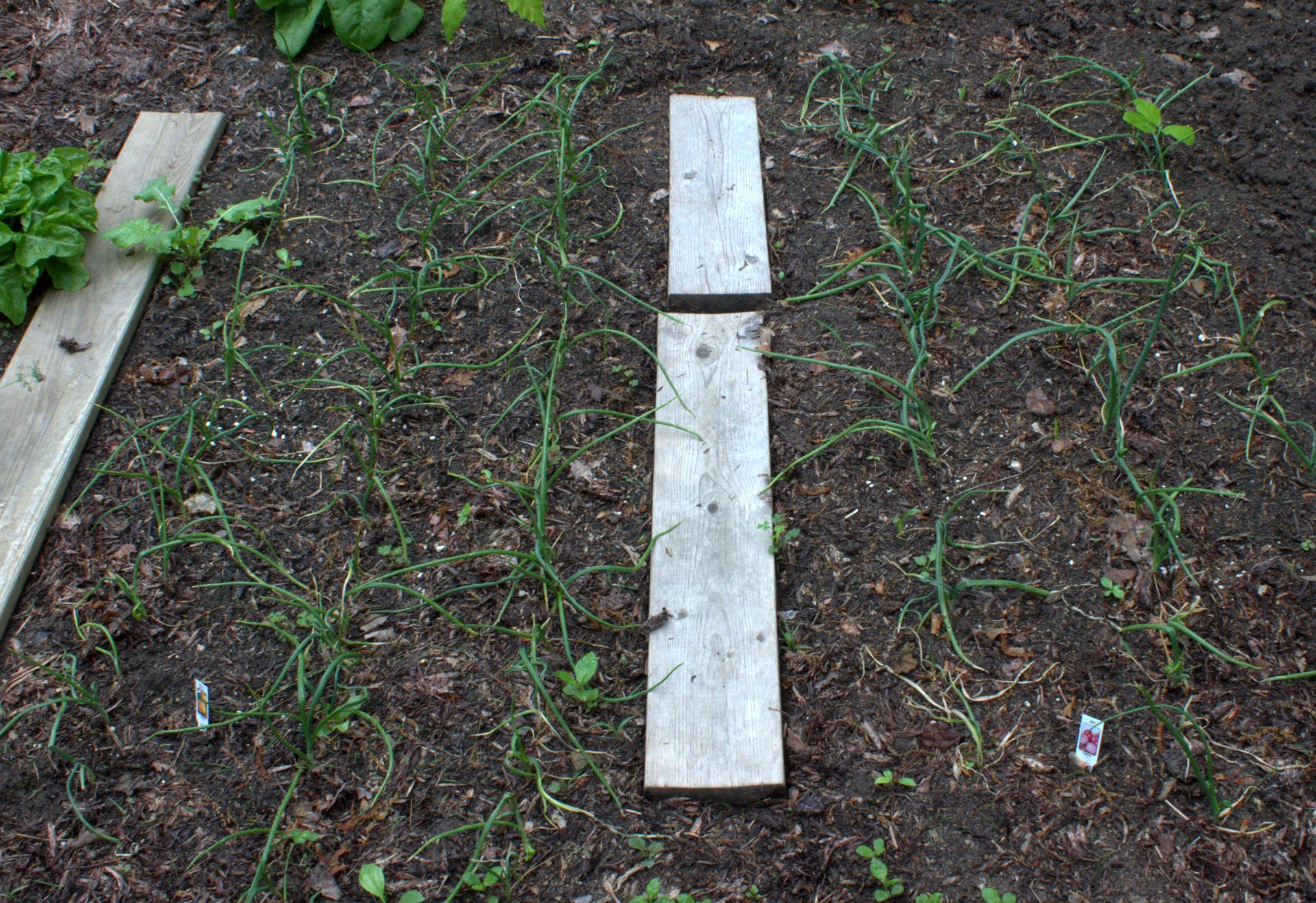
The garlic sprouts were thinned out and grew last summer and left to grow and overwinter. Now they’re growing again, and noticeably so! (Photo taken 29Mar2010.)

Garlic plants in the garden, two years old.

Garlic plants in the garden, two years old.

I’m looking forward to harvesting that garlic in the weeks ahead!

Reblog this post [with Zemanta]
Posted in Growing, Planting, Using Herbs | Tagged , , | Comments Off

Parsley Second Year Biennial Herb Garden

Parsley is one of the herbs that we always have growing. Sometimes it’s planted in the vegetable garden and other times it’s planted with the herbs along the walkway. You’ll need growing space of at least 1 sq. ft. for one parsley plant.

Parsley is a biennial plant, one that grows for two years, flowering in the second year. It will overwinter here at Zone 6, but I’m not sure how far north you can go and still get the second year crop. Further north parsley is probably treated as an annual by planting it each year. To protect it over the winter, we pile up leaves all around the parsley plants and perennial herbs.

The first year is pure vegetative growth. The plant will get larger and bushier. When the stems are too long they won’t remain erect and droop out to the sides, making the parsley plant into a large round shape.

Parsley second year right after overwintering.

Parsley second year right after overwintering.

Second year growth is primarily involved with sending up a flower stalk. Biennials require some sort of winter period of dormancy before they can flower. During the second year you should harvest as early in the year as possible because the plant will put most of its energy into creating the flower stalk, flowers and seeds, not in producing more parsley leaves.

Bolting is the term given to the rapid growth of the flower stalk in the second year. Once the plant has bolted, you might as well find another parsley to transplant. After bolting and setting seed the parsley plant dies.

Harvest any of the parsley as it grows. You can use scissors or just your fingers. The stems are pliable enough to let you just pinch off a piece. Snip off a sprig here and there for garnishes.

Before the flower stalk gets too tall, we usually harvest most of the parsley and put it in freezer bags, as is. Once frozen, you can use scissors to snip off some parsley for your soup or potatoes when ever you need it, and re-freeze the remaining parsley.

Reblog this post [with Zemanta]
Posted in Growing, Harvesting, Using Herbs | Tagged , , , | Comments Off